Understand Your Dog. Better. — Why We Built Dogmetry
Every owner knows their dog has a personality. We built a way to actually see it.
3 min read · August 12, 2026
Ask anyone about their dog and watch their face change. "She's silly and playful, but she gets nervous around men in hats." "He's the calmest dog you'll ever meet — until a squirrel shows up."
You know your dog like this. Not as a breed or a coat colour, but as a someone — a particular character with a way of moving through the world that is unmistakably theirs. If your dog swapped places with the identical-looking one down the street, you'd know within seconds.
And yet that knowing stays vague. It lives in impressions and half-formed guesses: "She's shy — I think." We feel our dogs deeply and describe them loosely. The richest thing about our dogs — who they actually are — mostly goes unmeasured.
That gap is why we built Dogmetry.
From a felt sense to something you can see
Dogmetry ("dog" plus "-metry", as in measurement) turns that felt sense into something you can see and track. You answer a set of questions about your dog, and out comes a clear profile across the five traits that make up canine personality — how sociable, how emotionally reactive, how energetic, how trainable, how bold. Not a label. Not a diagnosis. A portrait, in the dog's own proportions.
If that sounds like dressing a feeling up as science, here's the surprise: your gut feeling is good. In a well-known 2003 study, researchers showed that people's judgments of a dog's personality are both reliable — different people who know the dog agree — and accurate — those judgments match how the dog actually behaves. The person holding the leash is an excellent instrument. What's been missing is a way to read the data back.
And because personality isn't a snapshot of one afternoon, Dogmetry is built to be repeated over time — so you can watch the shy rescue become the dog who greets the mail carrier, and actually see the change instead of half-remembering it.
More than a breed
We all read dogs by their breed, and it's mostly wrong. A 2022 study in Science of more than 18,000 dogs found that breed explains only around nine percent of the differences in behaviour between individual dogs. Small, but not nothing — and the other ninety-something percent is your dog being your dog. Breed is a rumour. Personality is the truth.
Where this comes from
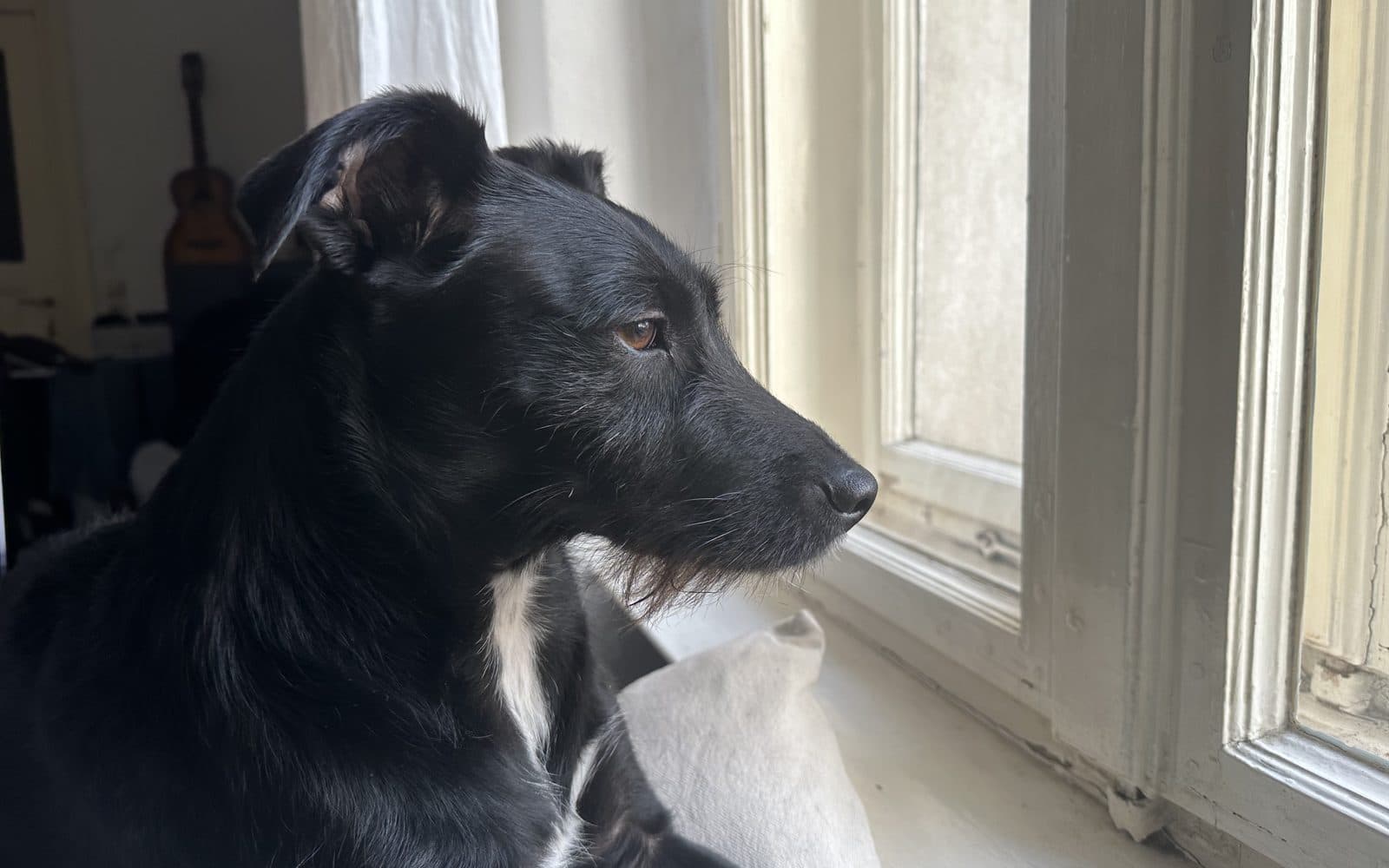
Dogmetry was started by Nazar Akrami, a professor of psychology who has spent his career on the science of measuring human personality — how you measure something as slippery as a character, and how you do it honestly. As a boy he was never allowed a dog. The one who eventually filled that space is Toby Linero, a former street dog who, in Nazar's words, "loves without any boundaries." Dogmetry is an attempt to give that kind of love the serious attention we usually reserve for ourselves.
So we say the honest things out loud, always. Dogmetry measures personality, not behaviour problems — never medical, never diagnostic. Before opening, we tested the instrument in a validation study of 171 dogs, and comparisons with other dogs will be built on real dogs in our own community, only once there are enough to mean something. Where we're not sure, we'll tell you.
We're also openly for-profit, and we'd rather say that plainly than pretend otherwise. The commitment that balances it: at least twenty percent of revenue goes back to dogs — research on dogs and the dog–human bond, and the shelters, rescues and street-dog organisations that care for dogs like Toby Linero once was. Money that comes from dogs goes back to dogs.
Understand your dog. Better. That's the whole promise — including "better," which is a direction, not a destination.
Start with your dog's free Snapshot — five minutes, twenty-five questions, and a first honest look at all five sides of the dog beside you. We'll bring the science. You already know the dog.
References
Gosling, S. D., Kwan, V. S. Y., & John, O. P. (2003). A dog's got personality: A cross-species comparative approach to personality judgments in dogs and humans. Journal of Personality and Social Psychology, 85(6), 1161–1169. https://pubmed.ncbi.nlm.nih.gov/14674821/
Morrill, K., Hekman, J., Li, X., McClure, J., Logan, B., Goodman, L., … Karlsson, E. K. (2022). Ancestry-inclusive dog genomics challenges popular breed stereotypes. Science, 376(6592), eabk0639. https://doi.org/10.1126/science.abk0639