The Dog You Just Met: The Magic (and Science) of Comparing Two Dogs
Scan a code at the park and see, side by side, how two dogs' personalities actually line up.
3 min read · August 13, 2026
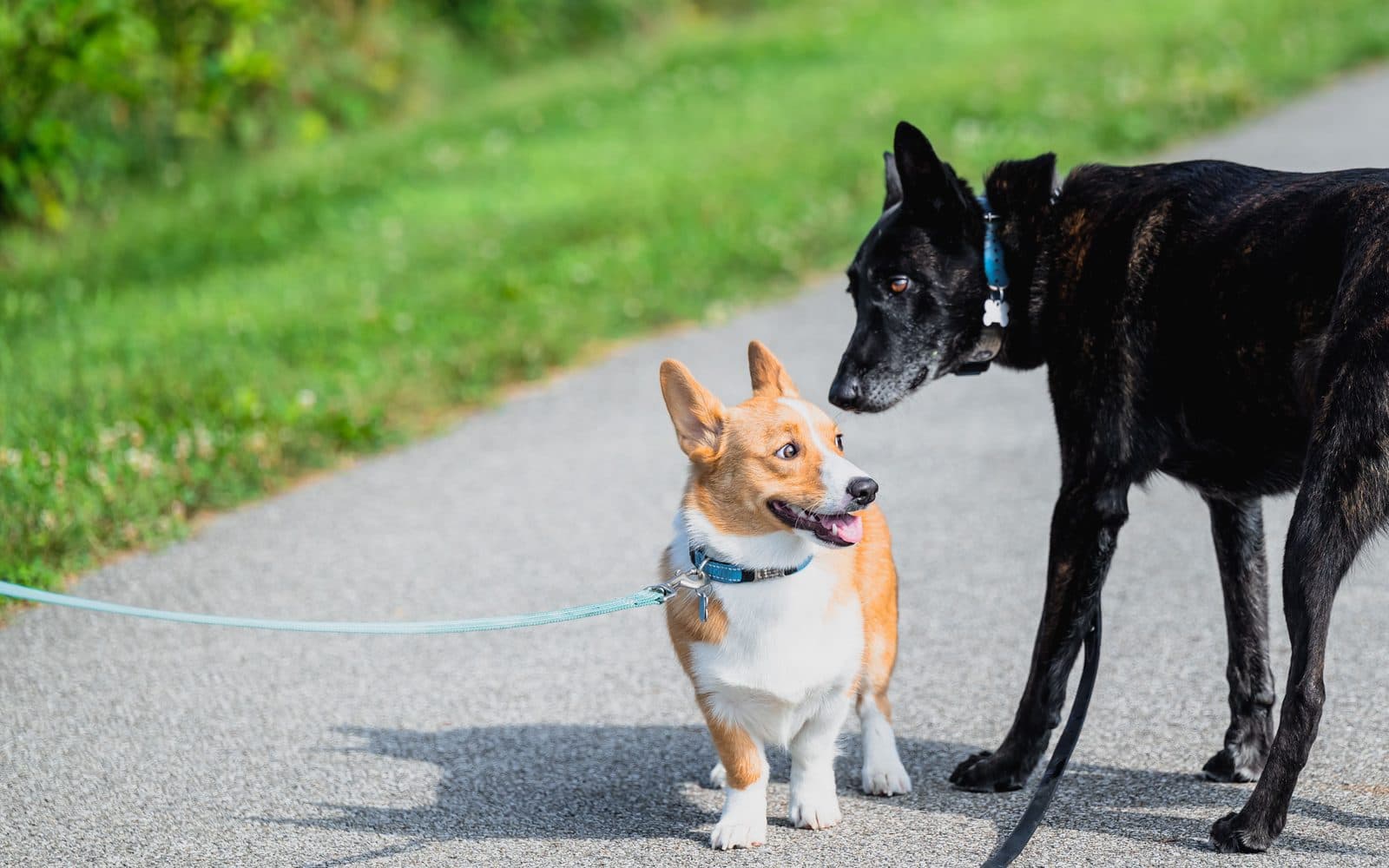
You know the moment. You're at the park, coffee going cold, and your dog is doing that thing — the full-body wiggle, the play bow, the "oh we are best friends now" routine — with a dog neither of you has met before. Or the opposite: the two of them circle, stiffen, and decide, firmly, that this friendship is not happening.
Either way, you and the other owner end up standing there, narrating. "She's so bold, isn't she." "Oh, he's the gentle one." That back-and-forth is one of the most natural things two humans can do: we understand almost anything by comparing it to something else. A dog isn't "energetic" in the abstract — she's energetic compared to the sleepy hound by the bench.
Comparison is how we actually understand a dog
The small problem with park conversations: they're built on impressions. Lovely, warm, completely human impressions — and often fuzzy. One person's "bold" is another person's "a bit much." You're comparing two dogs on two different rulers.
That's the gap Dogmetry closes. Every dog is rated on the exact same five traits — Sociability, Emotional Reactivity, Energy, Trainability, Boldness — with the same questions and the same scale. Put two profiles next to each other and you're finally comparing on the same ruler. "She's clearly bolder than him, but he's noticeably more sociable" stops being a guess and becomes something you can see.
The science quietly does its job here. Is an owner's read on their own dog worth anything, or is it just love talking? It holds up: a well-known 2003 study by Gosling, Kwan and John found that human judgments of a dog's personality are both reliable — people who know a dog agree — and accurate — the judgments match behavioural tests and outside observers. Two carefully built profiles aren't loose impressions on a screen. They're genuinely comparable.
How the meeting works
So picture it back at the park. The dogs have decided, one way or another, about each other. You bring up your dog's Dogmetry code; the other owner scans it with their phone.
Here's the part we're proudest of: that code is an invitation, not a paywall. If the other dog isn't on Dogmetry yet, scanning your code invites them in — their owner answers the free five-minute Snapshot about their own dog, and the two dogs get a first side-by-side glimpse: where they're similar, where they differ, painted in broad, friendly strokes. No account fee, no catch. Your dog's code is a small gift you can hand to any dog person you meet.
The full trait-by-trait comparison — every factor, saved to both dogs' pages so you can find each other again — is part of each dog's Profile. But the door into Dogmetry, and the first look, is free from the very first scan.
And when results come up, they never read like a lab report. Plain language: on Energy, these two are very similar. On Boldness, clearly different. Friendly closeness bands, not statistics — because the goal is a better conversation between two dog people, not a homework assignment.
Sometimes the screen confirms what you felt: two calm, sociable dogs who were always going to get along. Sometimes it explains the clash — one high on Energy and Boldness, the other much lower — and suddenly "he found her a bit intense" makes sense, and nobody's dog is the villain. Different, not bad. That reframe alone is worth the scan.
So the next time your dog makes a new friend (or a new not-quite-friend), you can do more than guess out loud. You can look.
Get your dog's free Snapshot — five minutes, and your dog is ready for the next meeting at the park.
References
Gosling, S. D., Kwan, V. S. Y., & John, O. P. (2003). A dog's got personality: A cross-species comparative approach to personality judgments in dogs and humans. Journal of Personality and Social Psychology, 85(6), 1161–1169. https://pubmed.ncbi.nlm.nih.gov/14674821/